



Visible Mending: Turning a Torn Sweater into a Work of Art
Mending & Repair | September 28, 2026

Once upon a time, a hole in a sweater meant a trip to the rag bag. But a growing movement of makers has rediscovered the old art of visible mending, and honestly, it's one of the most joyful things you can do with a needle. Instead of hiding a repair, you celebrate it. A darned elbow becomes a patch of woven color. A moth hole becomes a tiny embroidered flower. Suddenly, the garment you were about to discard is more precious than ever, carrying a story of care and creativity.
The philosophy behind visible mending is simple. Clothes are meant to be worn, and wearing means wearing out. Rather than pretending that wear doesn't happen, we honor it. Every stitch is a small act of resistance against the throwaway culture that tells us to buy new instead of tending what we already own. It's also deeply satisfying. There's a quiet pride in pulling on a sweater you've rescued yourself.
Darning Basics for Knits
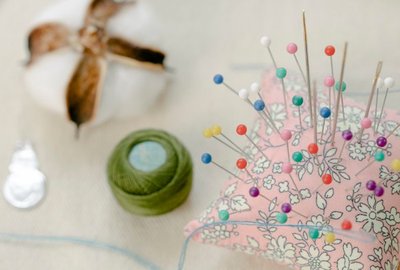
Darning is the traditional technique for repairing holes in knitted fabric, and it's easier than it looks. You'll need a darning needle with a blunt tip, some yarn or embroidery floss in a color you love, and ideally a darning mushroom or a smooth rounded object to stretch the fabric over while you work. Begin by anchoring your thread a little way from the hole, then work a series of parallel stitches across the gap, like a tiny ladder. Then weave a second set of stitches perpendicular to the first, going over and under to recreate the fabric's structure.
For a visible mend, choose a contrasting color. A mustard patch on a navy sweater, or a coral darn on a grey cardigan, turns the repair into a design feature. You can keep your stitches tidy and even, or let them be a little irregular for a more rustic, hand-made look. Both are beautiful. The key is to keep the tension gentle so the fabric doesn't pucker.
Embroidered Patches and Flourishes
If the hole is larger or in a spot where darning feels awkward, an embroidered patch is a lovely alternative. Cut a piece of felt or woven cotton slightly larger than the tear, pin it behind or over the hole, and stitch it down with a blanket stitch around the edges. Then embellish to your heart's content. A simple leaf, a scattering of French knots, or a little crescent moon can transform a patch into a tiny piece of art.
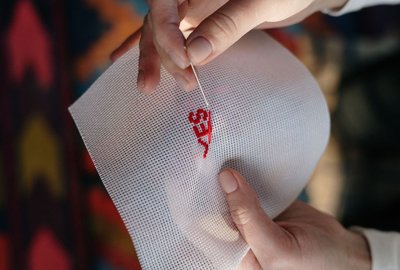
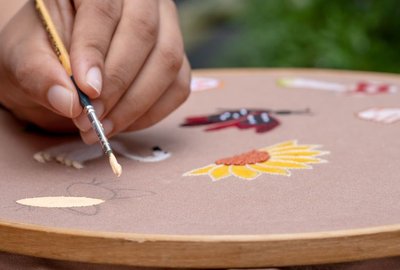
Small holes can also be disguised entirely with embroidery. A moth hole becomes the center of a daisy. A stain becomes a cluster of berries. Stretch the fabric in a hoop to keep your stitches even, and use a fine needle so you don't create new holes as you work. When you're finished, gently press the area from the wrong side and admire your handiwork. Your sweater is no longer damaged. It's been loved back to life, and it will keep you warm for many winters to come.


Bobbin And Bell

Stitch a warm, autumnal sampler filled with acorns, leaves, and a little house with a smoking chimney.